
Why fast internet in the office is now business-critical
Fast internet is now business-critical in the office because essential work processes depend on stable data connections: cloud applications, video conferencing, VoIP, file transfers, backups, AI tools and hybrid collaboration only work reliably when bandwidth, upload speed, latency, stability and the internal network structure all work together.
It is no longer simply a question of whether “internet is available”. What matters is whether the digital infrastructure reliably supports the day-to-day work of a modern company. If video calls drop out, cloud files synchronise slowly or uploads block the connection, this does not only affect IT. It affects productivity, client meetings, internal coordination and a team’s ability to work reliably.
At public-policy level too, high-performance digital infrastructure is described as a prerequisite for digital transformation. The Federal Ministry for Digital Transformation and Government Modernisation BMDS identifies fibre-optic expansion as a key objective and emphasises that digital transformation cannot succeed without high-performance networks.
Why office internet is more than a convenience
Many office processes are now cloud-based. Teams work together on documents and use project management tools, CRM systems, video conferencing, cloud storage, VoIP telephony and external platforms. Internet quality has therefore become part of the office infrastructure.
A slow connection is not merely inconvenient. It can delay workflows, disrupt meetings and slow down digital processes. This becomes particularly critical with real-time communication: Microsoft Microsoft Learn identifies network requirements, optimisation and bandwidth requirements, among other factors, as important considerations when preparing an enterprise environment for Teams.
For companies, this means that internet connectivity should be taken just as seriously when choosing an office as location, room size, furnishings or contractual flexibility.
What “fast internet” in the office really means
Many companies look first at download speed. That is understandable, but it is too narrow a view for everyday office use. A connection can look fast on paper and still cause problems in practice if upload speed, latency, stability or the internal infrastructure are inadequate.
| Term | Meaning in everyday office use |
|---|---|
| Download | retrieve data from the cloud, web, servers or platforms |
| Upload | send files, upload backups, transmit video, synchronise cloud data |
| Latency | response time of the connection, important for video calls, VoIP and remote access |
| Jitter | variation in delay between data packets, relevant to audio and video quality |
| Packet loss | data does not arrive in full; this can affect sound, image and connection quality |
| Symmetrical connection | upload and download are available at the same or comparable performance levels |
| FTTD | “Fibre to the Desk”: fibre-optic infrastructure is extended towards the workplace |
Microsoft Microsoft Learn describes jitter as variation in the delay between data packets; if this variation becomes too large, it can become noticeable to participants. This is exactly why simply looking at a high download speed is not enough in an office environment.
Which work processes depend on fast office internet
Video conferencing and screen sharing
Video conferences take place in real time. If the connection fluctuates, this is difficult to disguise: sound breaks up, images freeze, screen sharing is delayed or meetings drop out. It becomes particularly demanding when several people take part in video calls at the same time or hybrid meetings with clients are taking place.
Cloud software and collaborative working
Many essential business processes now run through cloud or SaaS applications: document editing, project management, CRM, accounting, design tools, developer platforms or communication solutions. The more cloud-based a company’s work becomes, the more important low latency, stable connections and reliable network quality become.
Large files, backups and data transfer
Large files are part of everyday work for agencies, architecture teams, media production, consulting, IT, research and data-driven business models. If uploads are slow or backups block the connection, the internet connection quickly becomes a bottleneck.
AI tools, automation and modern SaaS applications
Many AI and automation applications are cloud-based or access external services. Not every company needs maximum bandwidth for this. However, the more digital tools are used in parallel, the more internet quality becomes a productivity factor.
The risks caused by slow or unstable connections
Slow internet rarely appears as a single isolated problem. Its effects are spread across the entire working day: short waits, stalled uploads, interrupted meetings, repeated restarts, additional queries and technical problems that are difficult to pinpoint.
| Problem | Possible impact on everyday office work |
|---|---|
| Dropped video calls | client meetings or internal discussions can appear unprofessional |
| Poor audio quality | content has to be repeated and decisions are delayed |
| Slow cloud synchronisation | teams work with files or interim versions with delays |
| Weak upload performance | large files, backups and screen sharing become bottlenecks |
| High latency | VoIP, remote access and real-time tools respond with delays |
| Unstable connection | troubleshooting takes time and ties up internal resources |
| Lack of scalability | growing teams reach technical limits more quickly |
These risks are not caused solely by insufficient bandwidth. Inadequate internal cabling, overloaded Wi-Fi or a lack of network segmentation can also impair actual working quality.
Checklist: What companies should consider when choosing office space
When choosing an office, companies usually assess location, room size, facilities and rental model. The digital infrastructure should be reviewed just as systematically.
| Criterion | Why it matters | Question to ask when choosing an office |
|---|---|---|
| Fibre-optic connection | high-performance basis for modern data connections | Is fibre available in the building? |
| Symmetrical bandwidth | upload speed is often just as important to companies as download speed | Are strong upload and download speeds available? |
| Latency and stability | important for video calls, VoIP and remote access | How reliable is the connection in everyday use? |
| Internal cabling | performance must reach the workplace | How is the building connected internally? |
| Network segmentation | supports separate and secure working environments | Can networks be configured separately? |
| VPN options | relevant for secure access to company systems | Are VPN tunnels possible? |
| Scalability | requirements change with team size and tools | Can the infrastructure grow with the company? |
| Technical support | faults must be identified quickly | Are there contacts for technical questions? |
The most important question is therefore not simply: “How fast is the connection?” It is: “How reliably, securely and scalably does that performance reach users in everyday work?”
Why fibre optics are particularly relevant for modern offices
Fibre optics are particularly relevant for offices because they enable high data rates, stable connections and future-ready infrastructure. The BMDS BMDS describes fibre optics as a central foundation for the digital future and long-term economic resilience.
For companies, an important point is that fibre optics should not be considered only as far as the building. What also matters is how the connection is distributed internally – to workstations, meeting rooms, network ports, separate corporate networks and secure access points.
This is the difference between “internet is available” and “internet is designed for business processes”. Modern companies need an environment in which cloud-based work, video calls, data transfers and secure access can operate in parallel.
Classik Business Space in Berlin-Mitte: Office space with fibre-optic infrastructure
For companies that consider not only the address and facilities when choosing office space, but also the digital infrastructure, Classik Business Space in Berlin-Mitte may be a suitable option.
The offices are located at Rosenstraße 2 by Hackescher Markt. The location is in Berlin-Mitte, a 1-minute walk from Hackescher Markt. Museum Island, Alexanderplatz and Unter den Linden can be reached in around 5 to 10 minutes on foot; Friedrichstraße, Brandenburg Gate and the Reichstag in around 20 minutes.
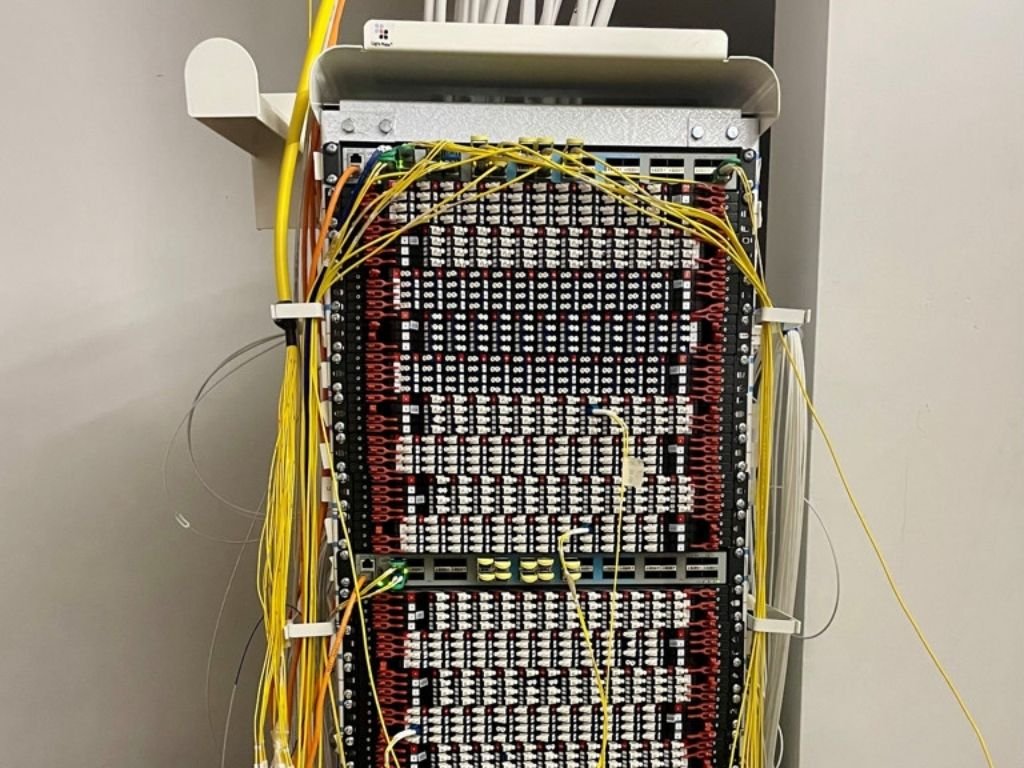
The Classik Business Space offers offices ranging from 12 m² to 200 m² and describes itself as a modern office location in Berlin-Mitte. For companies with digital workflows, the technical infrastructure is particularly relevant: the site has a 100 Gbps internet connection and provides 10 Gbps symmetrical Shared Internet Access as standard. Internal cabling, ports, network segmentation, VPN tunnels and FTTD are also listed as components of the infrastructure.
This makes the location particularly suitable for companies that see office space not simply as a workplace, but as a digital working environment: with a central location, fully furnished offices, flexible use and a technical foundation for cloud-based, hybrid and data-intensive work.
Which companies particularly benefit from an office with high-performance internet?
High-performance fibre-optic infrastructure is not important for every company for the same reasons. It is particularly relevant, however, for teams that work extensively with digital, hybrid or data-intensive processes.
Examples include:
- companies with many simultaneous video conferences
- start-ups and scale-ups with a cloud-first way of working
- agencies and creative teams working with large files
- consultancies with many client meetings and presentations
- IT, software and data-intensive companies
- international teams with regular remote collaboration
- project teams that need to become operational quickly
- growing companies with changing requirements
The more a team depends on digital processes, the more important it becomes to ask whether the office infrastructure can support those processes reliably.
Decision guide: Is standard office internet enough, or does your company need fibre?
Not every company needs the same technical setup. A small team that mainly writes emails, uses websites and holds only a few video calls has different requirements from a growing company with cloud workflows, large files and international meetings.
| Situation | Standard office internet may be sufficient | Fibre/high-speed infrastructure is particularly useful |
|---|---|---|
| small team using email and the web | often sufficient | not essential |
| many simultaneous video calls | may reach its limits | useful |
| large file uploads | often limiting | very useful |
| cloud-first company | depends on usage | useful |
| international teams | depends on tools | useful |
| IT, software or data projects | often critical | very useful |
| high requirements for secure access | depends on the setup | useful with segmentation and VPN |
| rapidly growing team | sufficient in the short term | scalable infrastructure recommended |
The best decision does not come from choosing the highest numerical value, but from comparing the infrastructure with actual day-to-day work: team size, tools, data volumes, security requirements and growth prospects.
Conclusion: Internet quality should be part of the office decision
Fast internet in the office is no longer an optional convenience. It is part of business-critical infrastructure. Companies choosing office space should therefore assess not only location, room size, furnishings and rental model, but also connection quality, upload performance, latency, stability, internal cabling, network segmentation and scalability.
For modern teams, high-performance fibre-optic infrastructure can make a real difference to video calls, cloud applications, data transfers, hybrid collaboration and everyday working speed.
The Classik Business Space in Berlin-Mitte combines flexible, fully furnished office space with fibre-optic infrastructure designed for digital workflows. For companies that want a central location and have high connectivity requirements, this is a relevant factor when choosing an office.
FAQ
Why is fast internet in the office business-critical?
Fast internet is business-critical because essential work processes now rely on cloud applications, video conferencing, VoIP, file transfers, backups, AI tools and hybrid collaboration. If the connection is slow or unstable, this can affect meetings, data flows and productivity.
What internet speed does a modern office need?
That depends on team size, applications and simultaneous usage. Download rates are not the only consideration; upload speed, latency, stability, internal cabling and scalability are also important.
Why is upload speed so important in an office?
Upload capacity is required for video conferencing, screen sharing, cloud synchronisation, large file transfers, backups and collaboration with external teams. A high download speed alone is therefore often not enough.
What does symmetrical internet mean?
With a symmetrical connection, upload and download are available at the same or comparable performance levels. This is particularly relevant for companies because they do not only retrieve data; they also send data regularly.
What does FTTD mean?
FTTD stands for “Fibre to the Desk”. It refers to fibre-optic infrastructure that is designed not only to reach the building, but to extend towards the workplace or working environment.
Is Wi-Fi the same as fast internet?
No. Wi-Fi describes the wireless connection within the office. The external internet connection, internal cabling, network devices, utilisation and configuration are also important.
Does Classik Business Space offer fibre optics?
Yes. Classik Business Space in Berlin-Mitte has fibre-optic infrastructure, has a 100 Gbps internet connection and provides 10 Gbps symmetrical Shared Internet Access as standard.

