
Hybrid working in Berlin: Why flexible workspaces are becoming increasingly important
Between working from home, the office and client meetings – work is more flexible today
Working with focus from home in the morning, holding a workshop with the team at lunchtime and attending a client meeting in the city in the afternoon – for many companies, this mix has now become part of everyday working life. As working models become more hybrid, the requirements placed on modern workplaces are changing too.
What is needed are working environments that can adapt flexibly to different tasks: places for focused individual work, rooms for meetings and opportunities for personal interaction. This is precisely why flexible workspaces in Berlin are becoming increasingly important.
What does hybrid working mean?
Hybrid working describes a working model in which employees move between different places of work depending on the task – for example, between working from home, the company office or a flexible workspace.
This model offers greater flexibility and can help companies use office space more efficiently. At the same time, expectations of the working environment are increasing. It should support both focused work and collaboration.
Why are the requirements for office space changing?
Traditional offices with permanently occupied workstations often no longer suit the way many companies work. Teams work on a project basis, employees are regularly on the move and meetings often take place both in person and digitally.
Modern working environments should therefore meet a range of requirements:
- quiet workstations for focused work
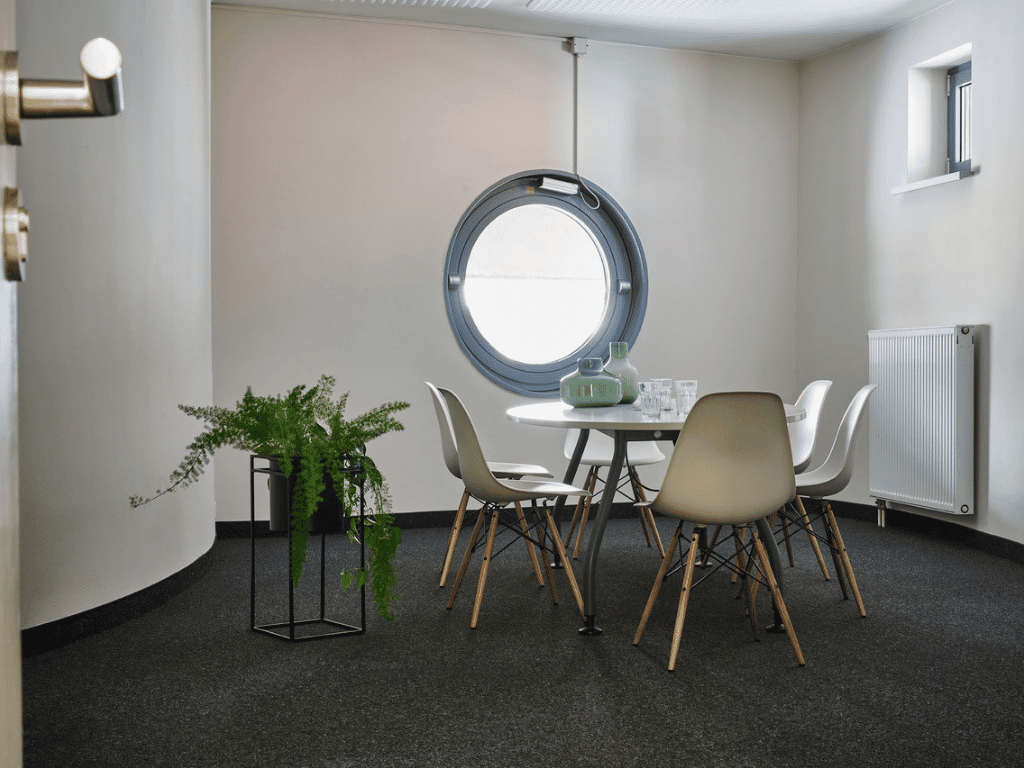
- meeting rooms for in-person and hybrid meetings
- reliable technical infrastructure
- flexible use depending on team size
- areas for informal interaction and collaboration
Your own workspace – without working alone
Many people value the freedom of working from home. At the same time, spontaneous interaction with colleagues or other professionals is often missing. Separating work and private life is not always easy either.
Flexible workspaces combine the best of both worlds. They provide the opportunity to work with focus at your own workstation or in a separate office while still being part of a professional working environment.
Whether over coffee, in communal areas or before a meeting, personal encounters often happen quite naturally. For freelancers, remote workers and small teams, this combination of focus and interaction can be a significant advantage.
Why flexible workspaces are particularly popular in Berlin
Berlin is one of Germany’s most important business and innovation hubs. Companies of all sizes are increasingly adopting hybrid working models and need places to work that can adapt to changing requirements.
Flexible workspaces provide the right conditions for this. They make it possible to use office space according to demand while also providing a professional setting for meetings, workshops or client appointments.
Centrally located sites in particular make travel easier for employees, clients and business partners.
What should companies consider when choosing a workspace?
| Criterion | Why is it important? |
|---|---|
| Location | Easy access for employees and clients |
| Flexible use | Adaptability to changing team sizes |
| Private work areas | Focus and privacy |
| Meeting rooms | Professional meetings and workshops |
| Technical equipment | Reliable internet and modern presentation technology |
| Community & interaction | Networking and professional exchange without having to give up your own workspace |
| Working atmosphere | A productive environment for different ways of working |
Is a flexible workspace right for your company?
A flexible workspace may be the right solution if you …
- coordinate hybrid teams.
- regularly hold client meetings or workshops.
- work on a project basis.
- do not require long-term office space.
- want to offer employees a professional alternative to working from home.
- want to combine focused work with personal interaction.
An example from Berlin-Mitte
The Classik® Business Space in Berlin-Mitte offers flexible office space and meeting rooms for different ways of working. Its central location makes it attractive to companies, project teams and business travellers who need a professional place to work in Berlin for a limited period. By combining Business Space facilities with the hotel, work and overnight accommodation can be brought together in one location – for example, for multi-day projects or workshops.
The focus is not on a rigid office concept, but on the option to use workspaces according to individual requirements.
Conclusion
Hybrid working is permanently changing the requirements placed on modern workplaces. Today, companies need working environments that support flexibility, focus and collaboration in equal measure.
Flexible workspaces offer a wide range of possibilities – from private workstations and meeting rooms to areas for informal interaction. Anyone looking for a centrally located solution in Berlin should consider not only the location, but also flexibility, technical equipment and a working environment that suits their own workflows.
FAQ
What is meant by hybrid working?
Hybrid working combines on-site work with working from home or mobile working. Depending on the task, employees move between different places of work.
What are the advantages of flexible workspaces?
They allow workstations to be used according to demand, provide professional infrastructure and create space for collaboration.
Can I use a dedicated workstation in a workspace?
That depends on the provider. Many flexible workspace concepts offer dedicated workstations or lockable private offices in addition to open areas.
What is the difference between coworking and a serviced office?
Coworking is often aimed at individuals or small teams working in open-plan areas. Serviced offices also provide private office space and additional services, such as meeting rooms or reception services.
Why is Berlin an attractive location for hybrid working?
Berlin combines a high concentration of businesses, good transport links and a wide range of flexible working environments.
What should you consider when choosing a workspace?
Important criteria include location, flexibility, technical equipment, meeting facilities, privacy and options for focused work as well as personal interaction.

